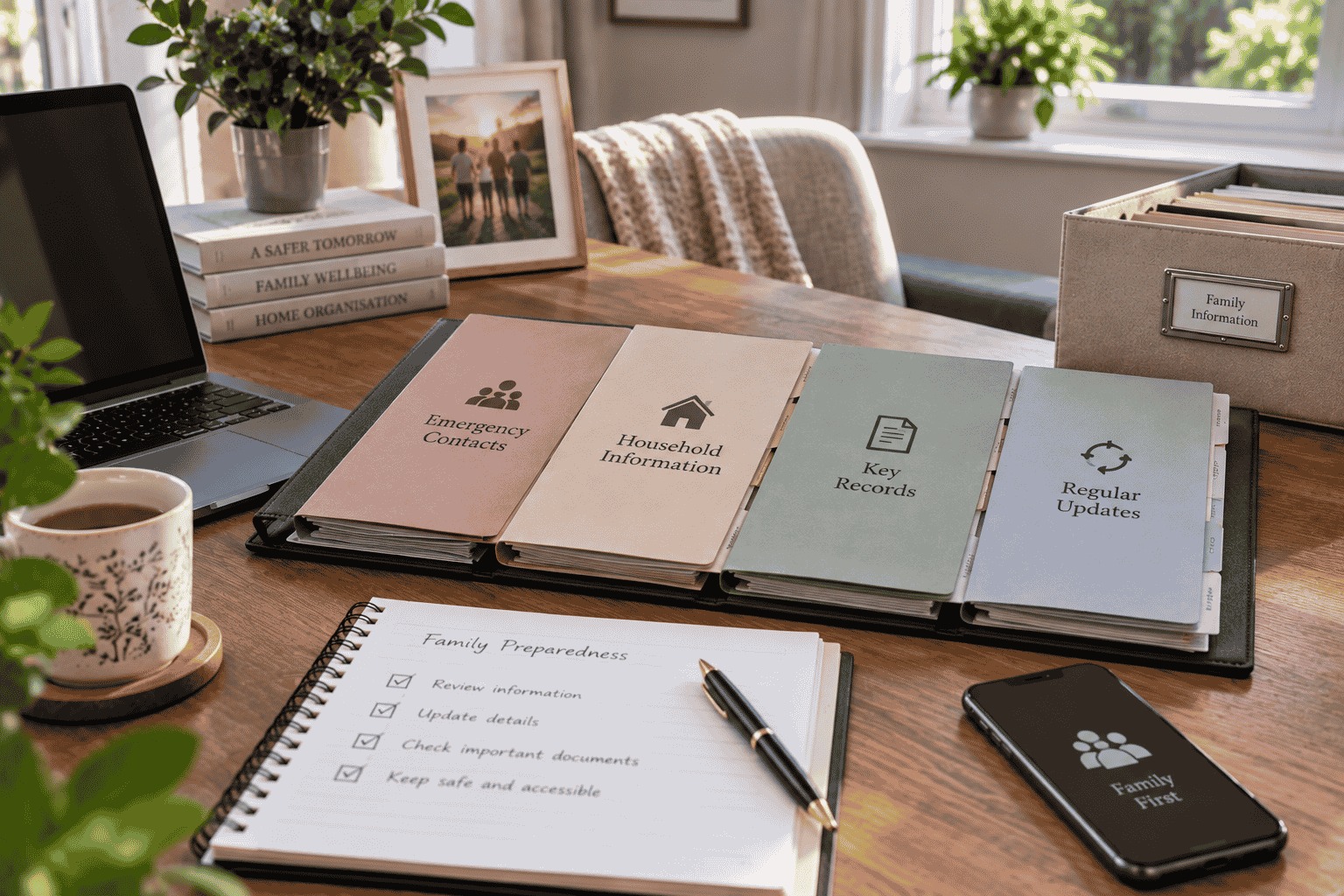
How to Create a Family Emergency Information File?
When an unexpected situation happens, families often need important information quickly. Emergency contact details, insu...



Your Digital Footprint
Digital accounts can contain much more than social media profiles. Your email may contain important correspondence, cloud storage may hold family photographs and documents, and online services may include subscriptions or other personal information. After someone dies, the relevant provider will normally have its own process for dealing with the account. Some services may allow an account to be closed or memorialised, while others may have specific requirements before information can be accessed or an account can be managed. This is why leaving a clear record of your important digital accounts can be valuable for your family.

“And let every soul look to what it has put forth for tomorrow.”
Preparing a digital legacy does not necessarily mean giving someone access to all your accounts. Instead, you can create a secure record of the important digital services and information that may need attention.
Consider recording your main email accounts, social media profiles, cloud storage, important subscriptions, digital photographs and other significant online services. You can also make a note of where important digital documents are stored.
Sensitive information such as passwords should always be protected carefully and stored using an appropriate secure method. The aim is to make your digital affairs easier to understand without compromising your privacy or security.
A little preparation today can help reduce uncertainty for your family in the future.

Plan Ahead Today
A simple plan can help your family understand and manage your digital affairs when they need to.
When an unexpected situation happens, families often need important information quickly. Emergency contact details, insu...

Important documents can become extremely valuable to your family when they need to understand or manage your affairs. Ye...

End-of-life planning is not only about what happens at the end of life. It is about making important decisions and organ...

A will and a letter of wishes can both play an important role in planning what happens after your death, but they serve...